Classic literature can introduce students to unforgettable characters, enduring themes, and stories that continue to shape our culture. It can also present unfamiliar language, complex plots, and pages of dense text, making it difficult for some students to find their way into the story.
Graphic novel adaptations offer another entry point.
Through illustrations, dialogue, and visual sequencing, graphic adaptations can help students build context, follow the action, and explore how a story changes across formats. They can be used in tandem with an original text, as an alternative format, or as a starting point for deeper analysis and discussion.
Don’t be fooled. Graphic adaptations aren’t simply “easier versions” of classic books. They are interpretations that require readers to make meaning from words, images, expressions, colors, and the space between panels.
Here are six practical ways to bring them into your classroom.
1. Preview the Story Before Reading the Original
When students are trying to understand unfamiliar language, keep track of several characters, and follow a complicated plot at the same time, it’s easy to lose the thread of the story.
Reading part or all of a graphic adaptation first can give students a foundation before they encounter the original. Visual context helps establish the setting, introduce important characters, and clarify the sequence of events. Students can then devote more attention to the author’s language, themes, and literary choices.
Try it: Before beginning Macbeth, use the graphic adaptation to introduce the characters and their relationships. Ask students to create a character map they can reference as they read the play.
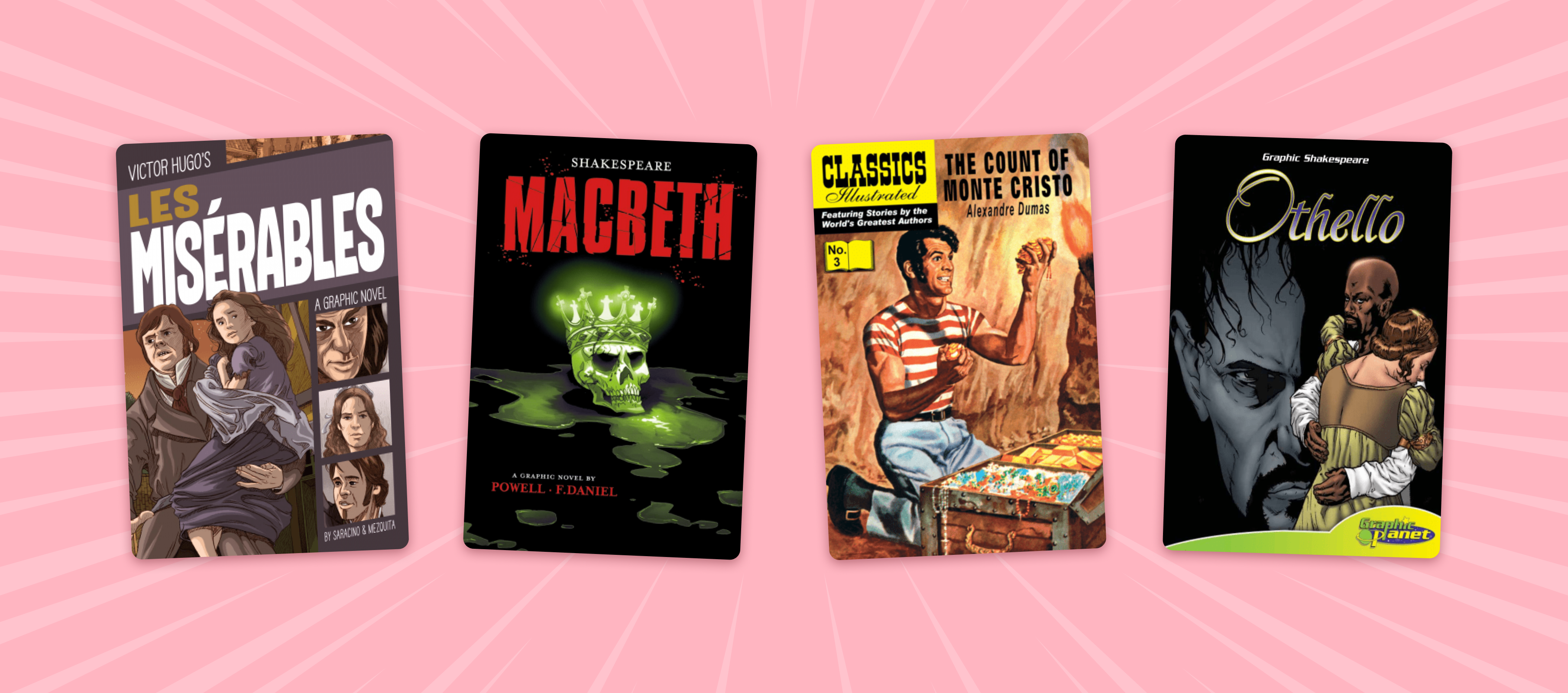
Titles to explore: Macbeth (Capstone), Othello (ABDO), The Count of Monte Cristo (Classics Illustrated), and Les Misérables (Capstone)
2. Compare How Different Formats Tell the Story
Every adaptation involves choices. An adapter must decide which dialogue to preserve, which scenes to condense, and how to communicate tone, pacing, and emotion visually.
Comparing the original text with a graphic adaptation helps students examine those choices. Instead of treating the graphic version as a shortcut, students can consider how each format creates meaning differently.
Try it: Select one scene from the original and its graphic adaptation. Ask students:
- What details did the adaptation emphasize?
- What was shortened, changed, or omitted?
- How do color, facial expression, and panel layout affect the mood?
- What does the original text communicate that the images do not?
- Which version shaped your understanding of the scene more strongly, and why?
Titles to explore: Frankenstein (Capstone), Jane Eyre (Classics Illustrated), The Fall of the House of Usher (Capstone), and The Stories of Edgar Allan Poe (Manga Classics)
3. Use Visuals to Unpack a Challenging Passage
Illustrations offer contextual clues that can help students understand unfamiliar vocabulary, shifts in setting, changes in perspective, and characters’ emotions.
That support can be especially useful for multilingual learners, students with diverse learning needs, and anyone encountering an unfamiliar writing style. Rather than lowering expectations, the additional context can give more students the foundation they need to participate in close reading and class discussion.
Try this: Show students a page from the graphic adaptation before they read the corresponding passage. Ask them to study the expressions, setting, and action, and predict what is happening. Then read the original passage and revisit their predictions.
You can also reverse the activity: read the original passage first, ask students to visualize it, and then compare their interpretation with the published adaptation.
Titles to explore: Around the World in 80 Days (Capstone), War of the Worlds (Capstone), A Christmas Carol (Capstone), and The Wizard of Oz (Classics Illustrated)
4. Give Students More Than One Way Into the Text
Not every student processes a story in the same way. Some may want to begin with the original prose, while others benefit from starting with a visual adaptation or moving between formats.
Offering multiple entry points gives students more ownership while keeping the class connected to the same characters, ideas, and themes. Depending on the lesson, students might read the original, explore a graphic adaptation, listen to an audiobook, or use a combination of formats.
This approach also helps move graphic novels away from being viewed only as a resource for struggling readers. They can be meaningful choices for any student interested in visual storytelling or a different interpretation of the text.
Try it: Create a format menu that lets students choose how to enter the story. At the end of the unit, ask them to reflect on which format or combination helped them understand the text and why.
Titles to explore: Anne of Green Gables (Andrews McMeel), Hamlet (ABDO), and War and Peace (Andrews McMeel)
5. Invite Students to Create Their Own Adaptations
Creating a comic or graphic novel requires students to do more than summarize. They must determine which moments matter most, select essential dialogue, sequence the action, and decide how images will communicate details that may no longer appear in the text.
Those decisions provide a creative way to demonstrate comprehension while building visual literacy.
Try it: Ask students to adapt a scene into six or eight panels. Then have them write a short statement explaining:
- Why they selected that scene
- What dialogue they kept or removed
- How they established the setting and mood
- Which visual details they used to reveal character or conflict
- What they changed and why
Students could also work in groups as writers, illustrators, editors, and designers, creating opportunities for collaboration even when artistic confidence varies.
6. Use Adaptations to Keep Students Exploring
A graphic adaptation can be the beginning of a reading experience, not simply a tool for completing an assignment.
After finishing a class text, invite students to compare adaptations from different publishers, explore another work by the same author, or find a contemporary book with similar themes. Displays, reading lists, book tastings, and student recommendations can help turn one required title into a discovery of wider reading.
Try it: Display several versions of the same classic titles. Let students browse each one and vote on which adaptation most effectively captures the story’s characters, tone, or themes. Ask them to support their selection with specific examples.
You could also create a “Read This Next” collection that pairs classic literature with contemporary comics, manga, graphic novels, and retellings.
See It in Action at Wyandotte Public Schools
At Wyandotte Public Schools in Michigan, Library Director George Purdu worked with educators to incorporate graphic texts across grade levels and subject areas.
Eighth-grade educators used a graphic adaptation of Frankenstein as part of classroom instruction. Teachers found that the visual adaptation helped some students process the story and complete related classwork. Special Education teachers also used a graphic adaptation of The Count of Monte Cristo to make the classic more approachable for their students.
Graphic texts became part of learning beyond literature units, too. Elementary students used graphic nonfiction for biography projects, while graphic novels were included in the district’s Battle of the Books competition and high school Comics Club.
Rather than limiting graphic novels to one type of reader or assignment, Wyandotte used them to support comprehension, research, shared reading, student choice, and independent exploration.
Make Graphic Adaptations Available to Every Student
Choosing the right title is only part of the planning. If an entire class needs to read the same adaptation, limited copies, holds, and traditional one-copy, one-user ebook licenses can make implementation difficult.
Comics Plus® gives schools unlimited, simultaneous access to thousands of digital comics, manga, graphic novels, and picture books, including adaptations of classic and contemporary literature. Every student can access the featured title at the same time without holds, waitlists, or borrowing limits.
Educators can use Comics Plus to:
- Introduce a graphic adaptation to an entire class
- Compare versions from different publishers
- Support shared reading and classroom discussion
- Give students more choice in how they access a story
- Connect literature units with independent reading
- Build curated collections around authors, themes, and genres
A New Way Into a Familiar Story
Graphic adaptations don’t need to replace classic literature to transform how students experience it. They can build background knowledge, clarify difficult moments, encourage close analysis, and invite students to make their own creative choices.
For some students, an adaptation will provide the context they need to engage with the original. For others, it may reveal a new appreciation for visual storytelling or lead them toward a book they might not otherwise have chosen.
The goal isn’t to move every student toward one “right” way of reading. It’s to give more students a meaningful way into the story—and more reasons to keep exploring after the lesson ends.
Explore Graphic Adaptations With Comics Plus
Interested in using graphic novels to support instruction, expand student choice, and bring classic literature to life? Explore our Literary Classics: Graphic Adaptations collection, or contact our team today to learn how Comics Plus can support your school.