
Clever tricksters, courageous heroes, and powerful gods have captured readers’ imaginations for generations. Folktales, legends, myths, and fables carry lessons, beliefs, and cultural traditions, often shared through oral storytelling long before being written down. Exploring these stories invites students to discover different perspectives and consider familiar questions about friendship, loyalty, courage, and conflict.
Graphic adaptations bring another layer to that exploration. Illustrations offer clues about characters’ emotions, settings, and key events, giving students more to draw on as they follow the story and discuss its meaning. These selections provide opportunities to practice retelling, identify central messages, and compare themes across cultures or versions of a story.
The recommendations below are all available in Comics PlusⓇ, with unlimited, simultaneous access that makes it easy for students to read together and bring their own observations to the conversation.
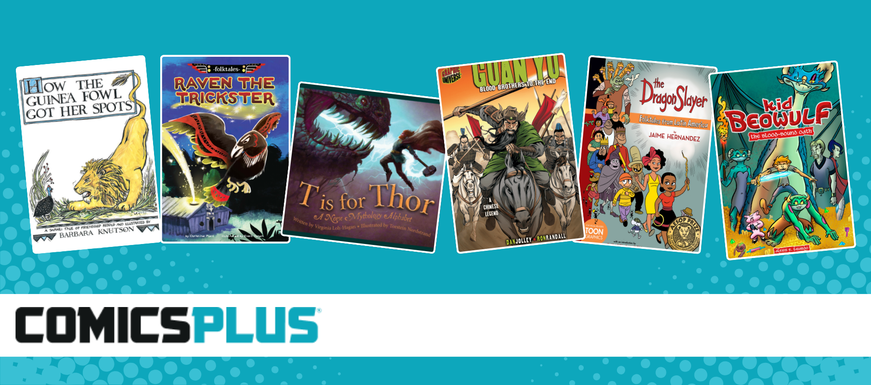
Classroom Connections: Quick Picks
Folktales: Follow the Story, Find the Message
Clever animals, unexpected helpers, and imaginative adventures give students plenty to explore in these folktales. Use the selections below to practice retelling key events, discuss how characters’ choices reveal a central message, and compare familiar themes across stories from different cultures.
How the Guinea Fowl Got Her Spots by Barbara Knutson (Lerner)
In this Swahili folktale, the guinea fowl Nganga outwits a lion to protect her friend Cow, who repays her by splashing milk on her body for camouflage. Readers can enjoy a bold watercolor-and-line-art style in this illustrated tale that emphasizes the importance of friendship and mutual support.
Folktales: Raven the Trickster by Christine Platt and Evelt Yanai (ABDO)
This illustrated early reader shares a Pacific Northwest Indigenous tale about Raven, known as a legendary shape-shifting trickster in local lore. On a mission to bring light back to a darkened world, Raven’s story is inspired by vibrant art and regional totemic traditions throughout the graphic novel—highlighting how positive change comes from unexpected sources.
The Dragon Slayer: Folktales from Latin America by Jaime Hernandez (TOON Books/Astra)
Three classic Mexican folktales that highlight resourceful protagonists are retold in this novel illustrated by acclaimed artist, Jaime Hernandez (also available in Spanish as La Matadragones). With expressive six-panel comic pages and cultural essays to dive into what your readers learn, this graphic novel is ideal material for comparing traditional story patterns across cultures.
Legends: Explore Big Adventures and Lasting Themes
From loyal warriors to mysterious nighttime encounters, these legends invite students to explore courage, loyalty, and the choices that shape a story. Follow the characters’ journeys, look for recurring themes and patterns, and compare graphic adaptations with their source texts to see how artwork influences the telling.
Guan Yu: Blood Brothers to the End [A Chinese Legend] by Dan Jolley and Ron Randall (Lerner)
This adaptation from Three Kingdoms takes your readers through a Chinese legend that follows warrior Guan Yu and his oath of lifelong brotherhood. With action-packed panel artwork and detailed landscapes, readers can trace narrative structure, character motivation, and legendary quests.
Kid Beowulf: The Blood-Bound Oath by Alexis E. Fajardo (Andrews McMeel)
This graphic novel reimagines the classic epic, following the upbringing of twin brothers Beowulf and Grendel. Readers explore the journey of the human-monster duo through colorful artwork and narratives that blend epic fantasy with core themes of heroism, family, and loyalty. Educators can also explore the publisher’s teaching guide and additional Kid Beowulf titles.
The Legend of Sleepy Hollow by Washington Irving, Blake A. Hoena, and Tod Smith (Capstone)
A headless horseman haunts Sleepy Hollow, but the legend won’t keep schoolmaster Ichabod Crane away, especially with Katrina on the other side. Updated features support Common Core State Standards with expert-developed discussion and writing prompts, an expanded introduction, bolded glossary terms, and a fresh cover.
Myths: Discover Different Worlds and Shared Questions
Gods, extraordinary creatures, and epic conflicts bring big questions about the world into focus. These illustrated myths offer a starting point for exploring cultural traditions, identifying key details, and comparing how different stories approach power, conflict, and the relationship between people and the divine.
T is for Thor: A Norse Mythology Alphabet by Virginia Loh-Hagan and Torstein Nordstrand (Cherry Lake)
This alphabetical picture book explores Norse mythological figures like Thor, Odin, and Loki. Readers can enjoy full-color illustrations that provide an engaging way to introduce them to Norse mythology and cross-cultural pantheon comparisons.
Warring Gods by Nel Yomtov and Eduardo Garcia (Capstone)
This book immerses readers into seven epic battle myths spanning Greek, Egyptian, Slavic, Norse, Native American, Babylonian, and Fijian traditions. The dynamic illustrations in this graphic novel bring these clashes to life for readers, while the built-in myth maps and critical-thinking questions provide a structured framework for comparison—students can easily analyze shared motifs and cultural nuances to deepen their appreciation for ancient storytelling.
Bring Comics Into Your Classroom
Graphic novel adaptations are resources for traditional literature. The adaptations offer educators a versatile approach to supporting folklore studies, cultural exploration, and literacy development. By adding graphic adaptations to your classroom, educators bring rich visual storytelling and diverse cultural perspectives into daily lessons, fostering greater empathy and global awareness among students.
Looking for more ways to connect Comics Plus with your curriculum? Contact your client success manager or email success@joyfulreading.com for ideas and support.
New to Comics Plus? Connect with our team to learn more.